
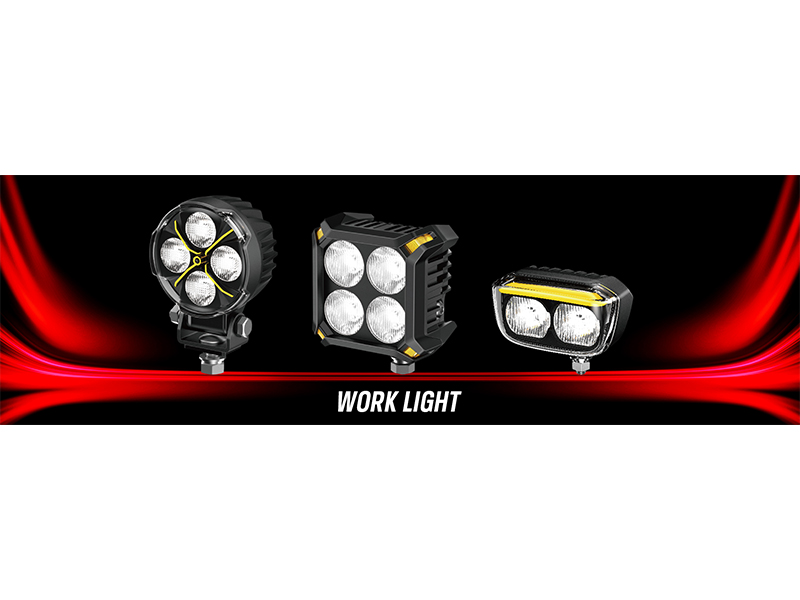
LED Lights for Tractors Overview
LED tractor lights are advanced lighting solutions for modern agricultural machinery, improving visibility, safety, and work efficiency in low-light conditions with higher brightness, wider beam coverage, longer service life, and more reliable performance than traditional halogen lights.
Compared with traditional halogen systems, LED lights provide:
- Higher brightness with lower power consumption
- Wider beam coverage for field operations
- Longer lifespan and lower maintenance cost
- Lower electrical load on the vehicle’s system
- Much lower heat output than halogen bulbs
- Better performance in vibration and harsh environments
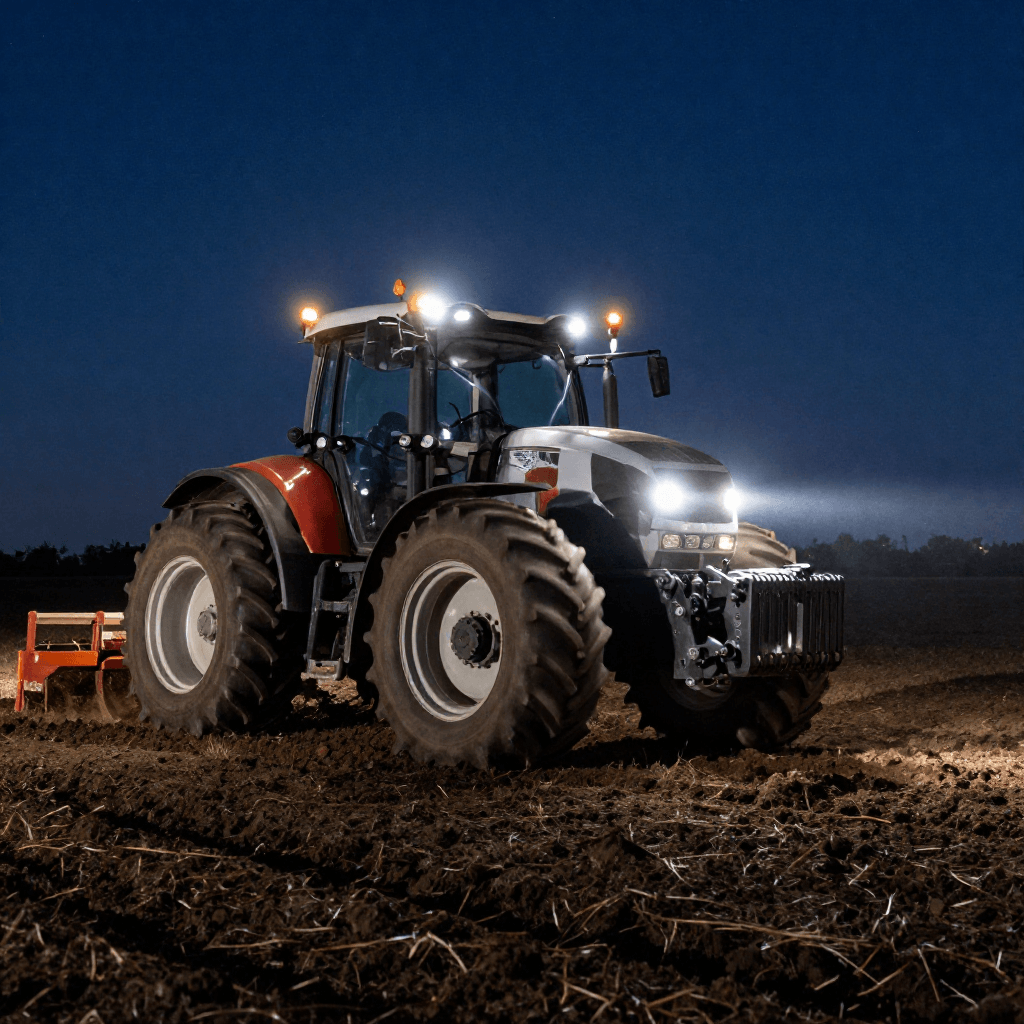
From our experience working with agricultural lighting configurations for OEM and ODM clients, LED upgrades are not just a “brightness improvement” — they deliver whiter, more daylight-like light in real field use and significantly change how efficiently tractors can operate at night, especially in large-scale farming environments. Although the initial investment is usually higher than halogen, LEDs often pay for themselves over time through durability and energy savings.
For OEM and ODM buyers, distributors, and manufacturers sourcing or customizing tractor lighting, this guide focuses on the practical decisions that affect performance and purchasing: light types and beam patterns, output selection by tractor size and task, work light placement, heavy-duty features, lighting kits, waterproofing and thermal design, installation, customization, and after-sales support. Many of our OEM and ODM customers request customized lighting setups based on tractor models and working environments, and we typically align designs with certifications such as ECE, SAE, and CE to ensure compliance across different markets.
Light Output: Choosing by Task
One common misconception is that higher wattage equals better performance. In real applications, lumens (light output) and lux distribution (usable light on the ground) matter more.
- Rated lumens describe theoretical output
- Operational lumens reflect real working conditions after heat loss and optics efficiency
Recommended lumen ranges:
- Small tractors: 2,000–4,000 lm per light
- Medium tractors: 4,000–8,000 lm per light
- Heavy-duty tractors: 8,000–12,000+ lm per light
However, what matters most is how light is distributed across the working area rather than peak brightness alone.
Led Tractor Headlights and Beam Patterns
LED tractor headlights are available in road-legal and off-road configurations depending on application requirements.
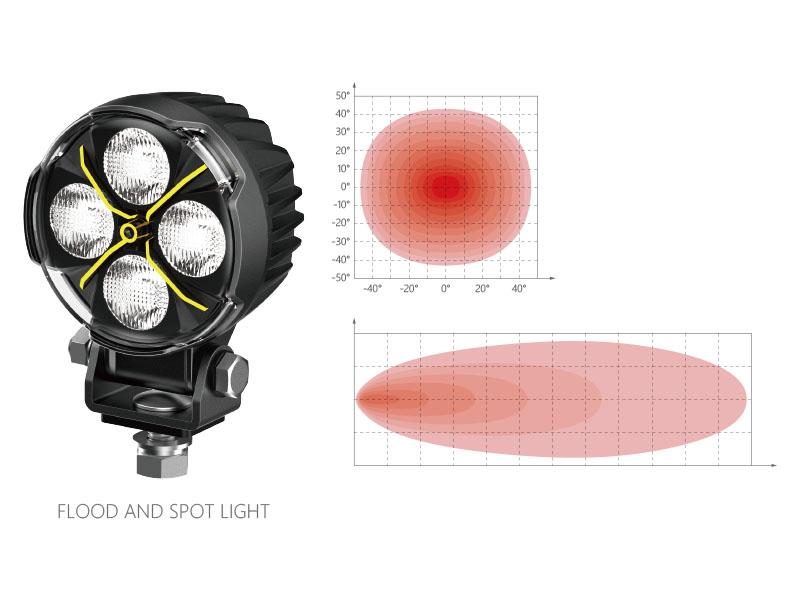
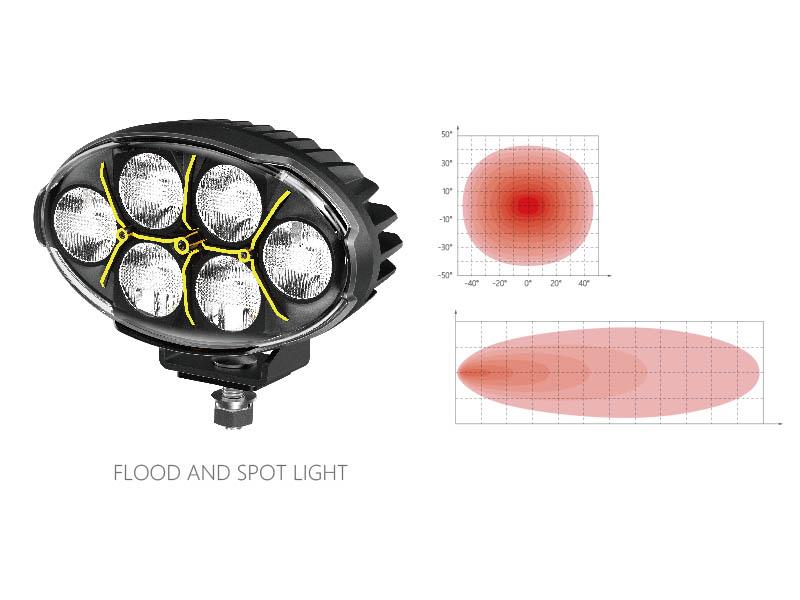
Common beam types:
- Spot beam: long-distance visibility
- Flood beam: wide-area coverage
- Combo beam: balanced performance for mixed tasks
For field operation, beam pattern selection is often more important than brightness.
Headlight aiming should ensure:
- No direct glare into operator line of sight
- Even ground illumination within working range
- Minimal shadow zones during turning or reversing
Led Work Lights and Work Light Placement
Work lights are essential for agricultural operations that require close-range visibility.
Typical mounting positions include:
- Front grille area (forward task lighting)
- Rear fenders (implement monitoring)
- Cab roof (360° field coverage)
- Side mounts (edge visibility during turning operations)
Anti-glare optics and cut-off designs help reduce eye strain during long operations.
From our field observations with tractor users engaged in night farming operations such as plowing, harvesting, operating sprayers, transporting, and field inspection, we consistently found that non-LED lighting systems fail mainly in two areas: insufficient brightness and narrow beam coverage.
These limitations become especially noticeable during rainy or foggy conditions, where traditional lighting tends to scatter or lose effective ground visibility.
This is one of the main reasons many users switch to LED systems — not just for brightness, but for stable visibility across changing weather conditions.
Pro Series Heavy-Duty Tractor LED
The Pro Series is built for high-vibration and extreme working environments.
Key features include:
- Reinforced housing structure
- High thermal stability under long operation
- Shock and vibration resistance
- Operating temperature range: -35°C to +65°C
These models are typically recommended for heavy-duty tractors operating in continuous or industrial farming environments.
Light Kits and Tractor LED Kits
LED light kits usually include:
- Work lights
- A mounting bracket with included hardware
- Wiring harness
- Switch and relay system
A complete kit adds convenience and makes installation easy.
A complete wiring harness significantly reduces installation complexity and improves reliability. Some buyers also prefer one unit for simpler sourcing.
Custom kits can also be developed based on OEM requirements, allowing manufacturers to customize them for different tractor platforms.
Tractor LED Pod and Auxiliary Lighting
Pod lights are a compact LED light unit designed for targeted illumination.
They are commonly used for:
- Narrow field sections
- Edge lighting
- Supplementary visibility zones, with round pod options common for auxiliary placement
Best practice is to add pod lights to main light bars for full coverage.
Waterproofing, Thermal Design, and Durability
IP rating is a critical factor in agricultural environments.
- IP67: dustproof and temporary water immersion
- IP68: long-term water resistance
- IP69K: the highest waterproof standard for LED lights, ensuring waterproof protection during high-pressure washdown conditions (recommended for farm equipment)
Many products only claim IP67 or IP68 ratings.
Thermal design is equally important. Efficient heat sinks prevent LED degradation and maintain consistent brightness over time. Waterproof connectors also help prevent moisture from entering the electronics.
Chemical-resistant coatings are recommended for environments exposed to fertilizers, pesticides, or mud corrosion, and quality tractor led lights are often designed to operate from -40°C to +85°C.
Installation Guide for Led Tractor Lights
Basic tools required for an installation that typically takes 2–4 hours with basic tools:
- Screwdrivers
- Wrenches
- Drill if new mounting is required
- Wiring tools
Installation steps:
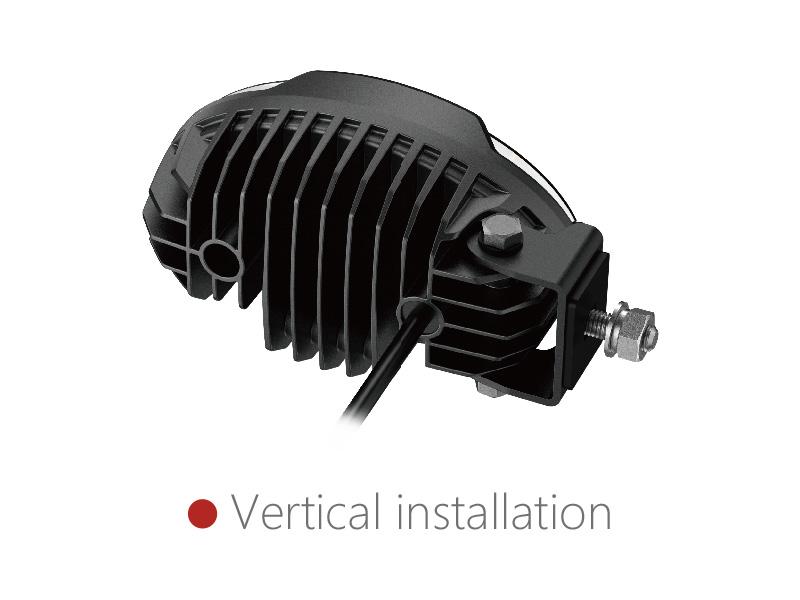
- Mount brackets securely on designated points
- Connect wiring through relay and fuse system
- Install control switch inside cab
- Adjust beam angle according to working range
- Test system under real field conditions
Proper installation ensures both performance and safety. For standard setups, the process usually does not require specialized electrical training.
One of the most frequent mistakes we observe is that users select LED tractor work lights based only on wattage.
In practice, this often leads to disappointing results because:
- High wattage does not guarantee higher usable brightness
- Some users choose narrow spot beams that improve long-distance visibility but reduce near-field clarity
- Low-cost lights often suffer from poor waterproofing, causing failure after rain or pressure washing
- In many cases, insufficient heat dissipation leads to brightness degradation over time
This is why real selection must consider beam pattern, waterproof rating, and thermal design together rather than only power rating.
Tractor LED Compatibility and OEM ODM Options
Compatibility considerations include:
- Voltage system 12V or 24V
- Mounting structure
- Electrical connector type
- Control system integration
Smartsun OEM ODM workflow typically includes:
- Requirement analysis
- Prototype development
- Testing and validation
- Final production approval
This ensures lights match specific tractor platforms and other vehicle platforms used in agriculture, with some full-system configurations producing up to 55,000 lumens.
In real customer projects, we rarely recommend a single lighting type.
Instead, we design configurations based on actual working conditions:
- Front lighting is optimized for distance and forward visibility
- Rear lighting focuses on close-range implement monitoring
- Combines and spraying tasks in agriculture require wider beam distribution than transport tasks
- Selection priority changes between brightness, beam angle, waterproofing, and thermal performance depending on usage scenario
This combination-based approach ensures lighting systems solve real operational problems rather than simply increasing brightness.
Purchasing Support and After Sales
Customers can access:
- Distributor networks
- OEM purchasing channels
- Technical support through direct contact options for installation or troubleshooting help
- Warranty, replacement, and after-sales support services
Competitors often stress comprehensive warranty coverage, lifetime support, and a 30-day return window, which means buyers absolutely expect suppliers to deliver responsive service when they contact support.
Spare parts such as lenses and brackets are recommended for long-term maintenance planning.
FAQs Common LED Tractor Lights Questions
How many lights are needed
Depends on tractor size and working environment, but most setups use a combination of front and rear lights for balanced coverage, and all-in-one setups can improve convenience
What is the lifespan of LED tractor lights
Typically 30000 to 50000 hours under proper thermal conditions, though some premium lights exceed 50,000 hours of use and are virtually maintenance-free compared to halogen
Are LED lights compatible with John Deere and Kubota tractors
Yes, and many options are designed to fit tractors from John Deere, Kubota, and other major manufacturers, but compatibility depends on voltage mounting type and connector configuration
Conclusion
LED tractor lights significantly improve agricultural efficiency by enhancing visibility safety and operational flexibility.
Choosing the right system requires balancing brightness beam pattern durability and installation conditions rather than simply selecting the highest wattage product