
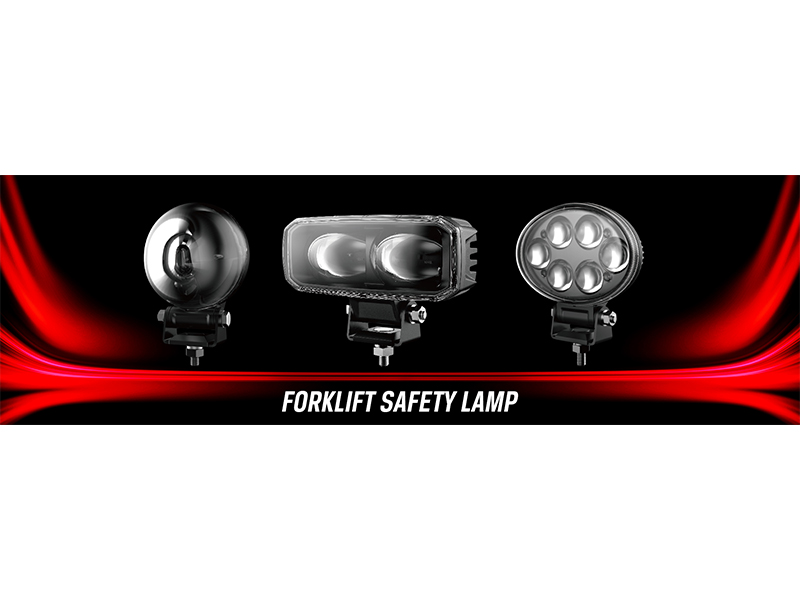
Forklifts are essential in warehouses, factories, distribution centers, loading docks, and production areas. But wherever forklifts and pedestrians work in the same space, safety risks increase quickly. A driver may have blind spots. A pedestrian may stand too close. A busy warehouse may be too noisy for a backup alarm to be noticed every time.
This is where forklift side boundary warning lights, also called red zone warning lights or forklift red zone lights, become valuable. These lights project a bright red line or boundary onto the floor beside the forklift, creating a visible “NO-GO ZONE” that reminds pedestrians to keep a safe distance from the moving vehicle.
The goal is simple: make the danger zone around the forklift easier to see, easier to understand, and easier to follow.
What Are Forklift Red Zone Warning Lights?
Forklift red zone warning lights are visual safety lights mounted on a forklift to project a red line, strip, arc, or boundary onto the ground. Unlike a horn or backup alarm, which gives an audio warning, red zone lights create a constant visual reminder around the forklift.
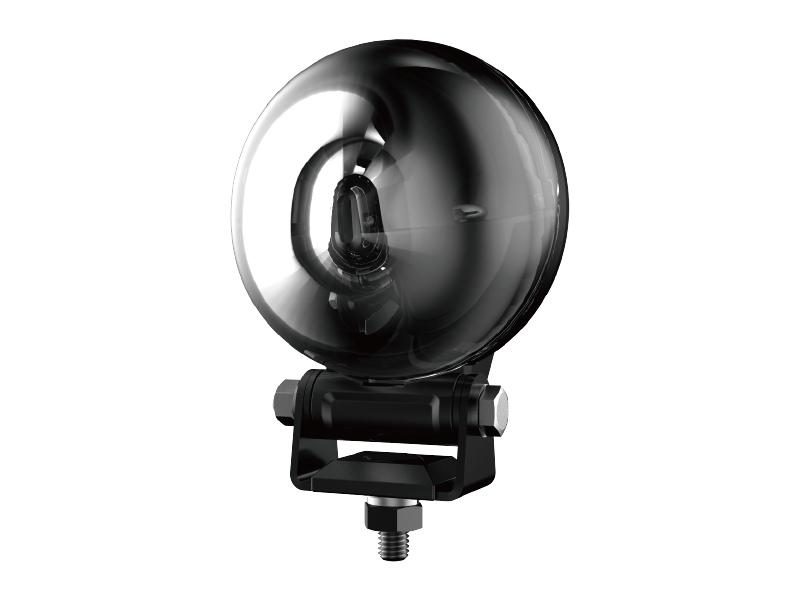
In daily warehouse operations, this is especially useful because pedestrians do not always judge distance correctly. A forklift may look slow, but it can still cause serious injury if a worker stands too close to the side, rear swing area, or wheel path.
From our frontline experience, forklift side boundary warning lights are especially useful in warehouses where pedestrians and forklifts share the same working space. In these mixed-traffic areas, verbal reminders or painted floor lines alone are often not enough during busy operations. A visible red boundary projected onto the floor gives workers a direct signal: stay outside this line.
Risks Addressed: Forklift Accidents and Workplace Safety
Common forklift-related accidents include pedestrian collisions, crushed feet, side-swipe incidents, rear-end swing injuries, falling loads, and accidents near loading docks or blind intersections. Many of these risks become worse in low-light areas, narrow aisles, cold storage rooms, high-noise factories, and warehouses with frequent pedestrian movement.
Pedestrian proximity is one of the most important risks. Workers may walk beside a forklift, stand near the rear turning radius, or step into the operating area while the driver is focused on the load. OSHA notes that powered industrial trucks may use safety and warning devices such as horns, backup alarms, mirrors, and warning lights, depending on the workplace conditions. OSHA Powered Industrial Trucks eTool
Red zone warning lights do not replace training, traffic rules, or physical separation. But they help make the safety boundary more visible at the exact moment workers need it.
Types of Forklift Warning Lights
Forklift warning lights can be divided into several categories: red zone side boundary lights, blue spot lights, arc warning lights, beacon lights, strobe lights, and combined audio-visual warning systems.
Visual-only lights are useful when the goal is to create a clear visible signal without adding more noise to the workplace. Audio-visual systems are better for high-risk intersections, blind corners, or areas where pedestrians may not notice a visual warning alone.
A practical forklift safety setup often combines several systems. For example, a blue spotlight can warn pedestrians that a forklift is approaching, while red side boundary lights show the unsafe side distance around the vehicle. Beacon or strobe lights can improve general awareness in busy areas.
Red Zone Line Systems
Red zone line systems project a clear red line onto the floor along one or both sides of the forklift. This line acts as a moving side boundary for pedestrians. Instead of telling employees to “KEEP TWO FEET TWO FEET AWAY FROM THE FORKLIFT,” the safety rule becomes visual and easy to understand.
After installing red zone boundary lights for customers in warehouse environments, one of the most noticeable improvements is that workers understand the safe distance more easily. They no longer need to estimate the danger zone by themselves. When they see the red line, they naturally avoid standing too close to the forklift.
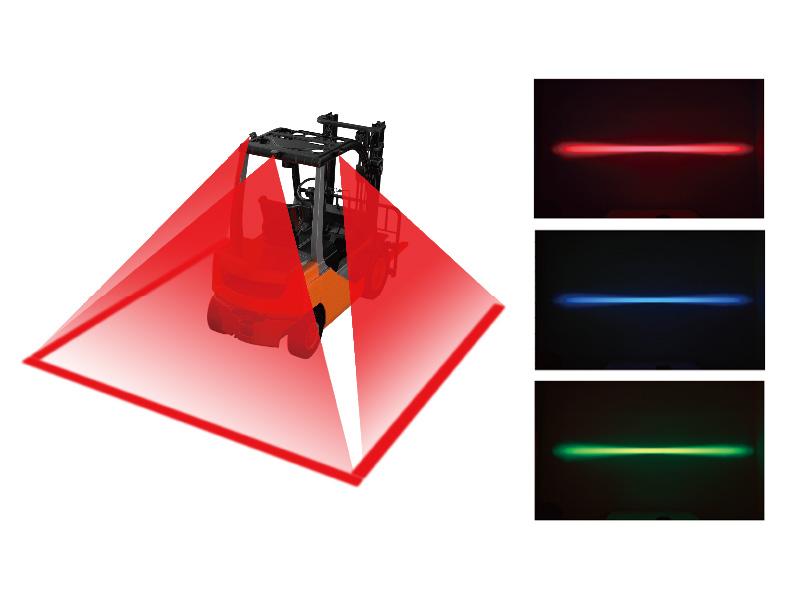
For mounting, the most common position is on the overhead guard, side frame, or another stable side position of the forklift. The beam should be angled downward to create a clear line on the floor. In most cases, mounting on moving forks is not recommended unless the light and bracket are specifically designed for that purpose, because fork movement can change beam alignment and reduce warning accuracy.
For full side protection, one light is usually installed on each side of the forklift.
Spot and Arc Warning Lights
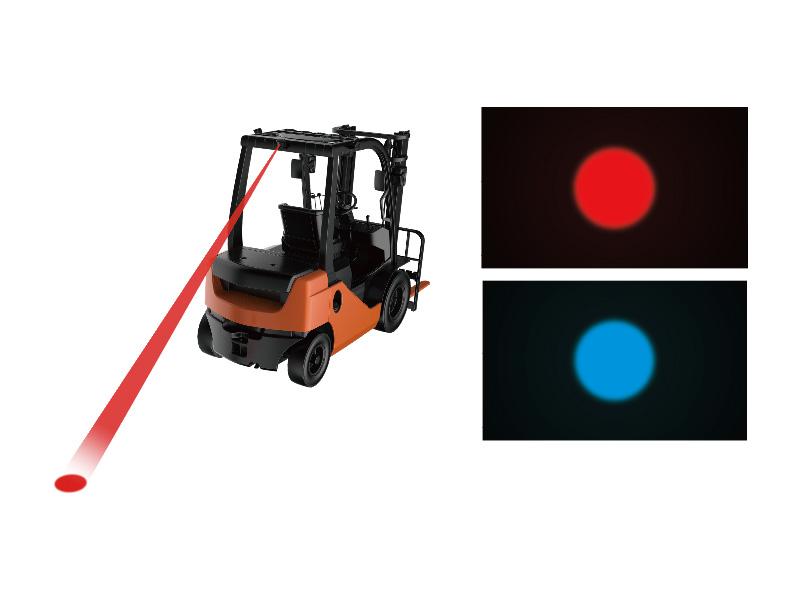
Spot warning lights project a bright dot or arrow on the floor, usually in front of or behind the forklift. Blue spot lights are commonly used to warn pedestrians that a forklift is approaching from a blind corner, aisle, or doorway.
Arc warning lights project a curved light pattern near the rear or side of the forklift. They are useful for showing the rear swing area, especially on counterbalance forklifts where the rear end can swing outward during turning.
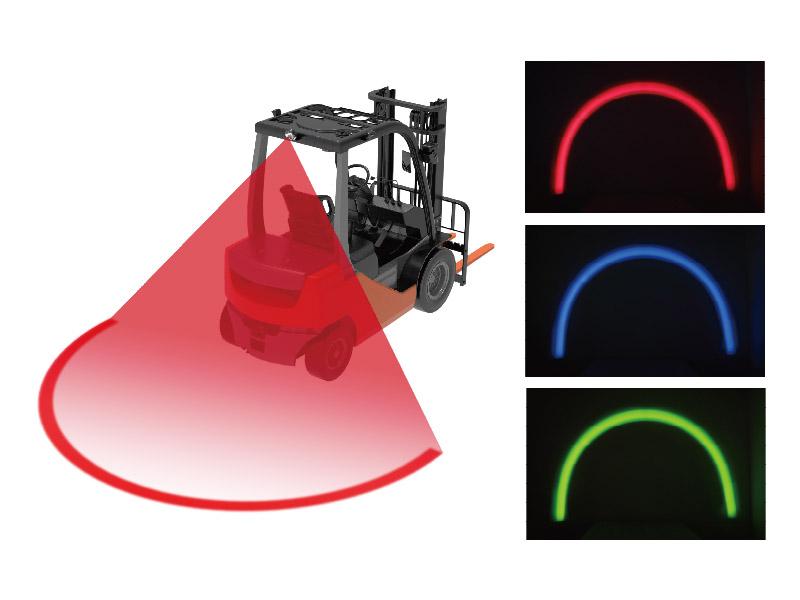
In general, blue lights are often used for approach and direction warnings, while red lights are more commonly used for danger zones, side boundaries, and no-go areas. The best choice depends on the traffic pattern of the warehouse.
Beacon and Strobe Warning Lights
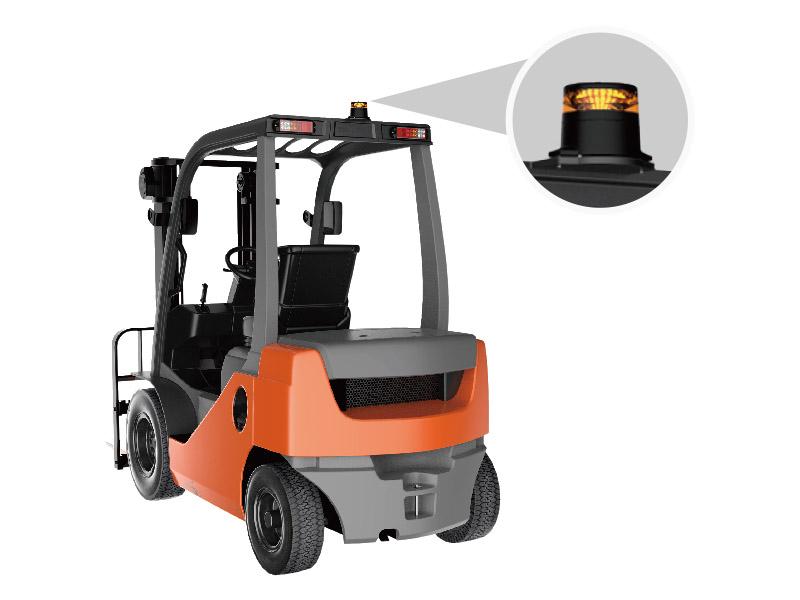
Top-mounted beacon lights improve general awareness by making the forklift more visible from multiple directions. They are useful in large warehouses, outdoor yards, and shared work areas.
Strobe lights are especially helpful in high-noise environments where workers may not hear horns or backup alarms clearly. However, strobe lights should be selected carefully to avoid glare or distraction for operators.
Design and Technical Considerations
The performance of a forklift warning light depends on more than wattage. Buyers should evaluate the actual visibility of the projected beam on the floor, especially under real warehouse lighting.
Based on our experience, one common mistake buyers make is choosing a warning light with insufficient ground projection brightness. If the red line is too weak, workers may not notice it under bright warehouse lights, which reduces the warning effect. Buyers should ask for real projection photos, test videos, or sample testing before bulk orders.
For most indoor warehouse applications, buyers should consider high-brightness LED models with strong optical lenses, low power draw, and stable heat dissipation. IP67 or higher waterproof and dustproof protection is recommended for industrial use, especially in cold storage, food processing, outdoor yards, and wet environments.
Good thermal management is also important. A forklift warning light may operate for long shifts, so the housing should help control heat and protect LED life.
Integration With Forklift Safety Systems
Basic red zone warning lights can be wired to the forklift power supply and remain on during operation. More advanced systems can be connected to reverse gear signals, proximity sensors, speed control systems, or fleet management systems.
For example, a red or blue warning light can be activated only when the forklift is moving in a specific direction. In higher-end fleet applications, CANBUS integration may allow centralized control, status monitoring, or customized warning logic.
Wiring should always be handled according to the forklift model, voltage, and electrical safety requirements. Common forklift systems include 12V, 24V, 36V, 48V, and higher-voltage electric platforms, so compatibility must be confirmed before installation.
How to Choose Forklift Side Boundary Warning Lights
When comparing forklift side boundary warning lights, focus on practical visibility first. The projected line should be bright, sharp, and easy to identify on the actual floor surface of the warehouse.
Buyers should also check the working voltage, beam pattern, housing material, IP rating, vibration resistance, connector type, mounting bracket, and warranty terms. CE certification is important for many markets. ECE or SAE-related requirements may apply depending on the region, vehicle type, and whether the equipment is used in road-going or regulated vehicle environments. For industrial warehouse use, buyers should ask the supplier which certifications and test reports match their target market.
OEM and ODM customization is also important for distributors and forklift equipment brands. Custom options may include logo printing, cable length, connector type, beam pattern, housing color, packaging design, and private-label branding.
Installation, Maintenance, and Testing
A typical installation process includes confirming forklift voltage, choosing the mounting location, fixing the bracket, adjusting the beam angle, wiring the light safely, and testing visibility on the floor.
After installation, the red line should appear at a practical distance from the forklift side. It should not be too close to the wheel path, and it should not be so far away that it confuses pedestrians or blocks normal workflow.
Monthly functional inspections are recommended. Check whether the light turns on properly, whether the lens is clean, whether the bracket is loose, and whether the beam is still aligned. After any forklift repair, collision, or bracket adjustment, the beam alignment should be tested again.
Maintenance and incident logs are also useful. They help safety managers understand whether warning lights are working correctly and whether pedestrian behavior is improving over time.
Case Study and ROI Thinking
For a warehouse pilot project, the safest way to measure ROI is not to claim a fixed accident reduction percentage. Instead, compare before-and-after data from your own site.
Useful metrics include near-miss reports, pedestrian safety observations, forklift-pedestrian separation compliance, damaged goods incidents, operator feedback, and maintenance costs. If a red zone warning light helps reduce close-contact situations, improves worker awareness, or supports better safety training, it can become part of a broader forklift safety improvement program.
The cost of one accident can include medical costs, downtime, investigation time, equipment damage, compensation, insurance pressure, and lost productivity. Compared with these potential losses, a pilot installation on several forklifts is often a practical first step.
Smartsun Solutions: Custom Forklift Warning Light OEM/ODM
Smartsun provides forklift warning light solutions for distributors, forklift equipment suppliers, and industrial safety product brands. Custom options can include red zone line lights, blue spot lights, arc lights, beacon lights, strobe lights, customized brackets, private-label packaging, and OEM/ODM product development.
For customers developing their own product line, Smartsun can support prototype development, sample testing, rapid tooling, packaging design, and branding customization. If your market requires specific certification documents, Smartsun can help match the product configuration with the target application and compliance needs.
Regulatory Guidance and Best Practices
Forklift warning lights should be used as part of a complete workplace safety system. OSHA emphasizes forklift visibility, operator awareness, pedestrian safety, and appropriate warning devices for powered industrial trucks. HSE guidance also highlights the importance of separating pedestrians and vehicles wherever possible, using clearly marked routes, safe crossings, and suitable barriers where needed. HSE Pedestrian Safety, HSE Separating Pedestrians and Vehicles
That means red zone warning lights work best together with operator training, pedestrian route planning, floor markings, signs, mirrors, speed limits, and site-specific traffic rules. Workers should be trained to understand what the red line means and why they should stay outside it.
Buying Checklist and FAQ
Before buying forklift side boundary warning lights, check the following:
| Item | What to Confirm |
| Visibility | Is the red line bright enough under your warehouse lighting? |
| Voltage | Does it match your forklift power system? |
| Beam pattern | Line, spot, arc, or customized projection? |
| IP rating | Is it suitable for dust, water, cold storage, or outdoor use? |
| Mounting | Does it include adjustable brackets? |
| Certification | CE, ECE, SAE, or other documents required by your market? |
| Warranty | What is covered and for how long? |
| OEM/ODM | Can the supplier support branding, packaging, and connector customization? |
How many red zone lights does one forklift need?
Usually two, one for each side of the forklift.
Can red zone lights replace forklift training?
No. They should support training, not replace it.
Are red zone lights useful in bright warehouses?
Yes, but only if the projected beam is bright enough. Always test visibility under real lighting conditions.
Can the beam distance be adjusted?
In most cases, yes. The mounting angle can be adjusted to set the red boundary at a suitable distance.
Summary: Next Step for Forklift Safety Upgrades
Forklift side boundary warning lights help make the red zone around a forklift visible and easier to understand. They are especially useful in warehouses where pedestrians and forklifts share the same space, and where workers need a clear reminder to stay away from the danger zone.
For safety managers, warehouse operators, and forklift equipment suppliers, the best approach is to start with a pilot installation. Test the light brightness, beam alignment, worker response, and maintenance needs in a real operating environment.
If you are looking for custom forklift red zone warning lights, blue spot lights, arc lights, or OEM/ODM forklift safety lighting solutions, Smartsun can help you evaluate the right configuration for your fleet and market.