
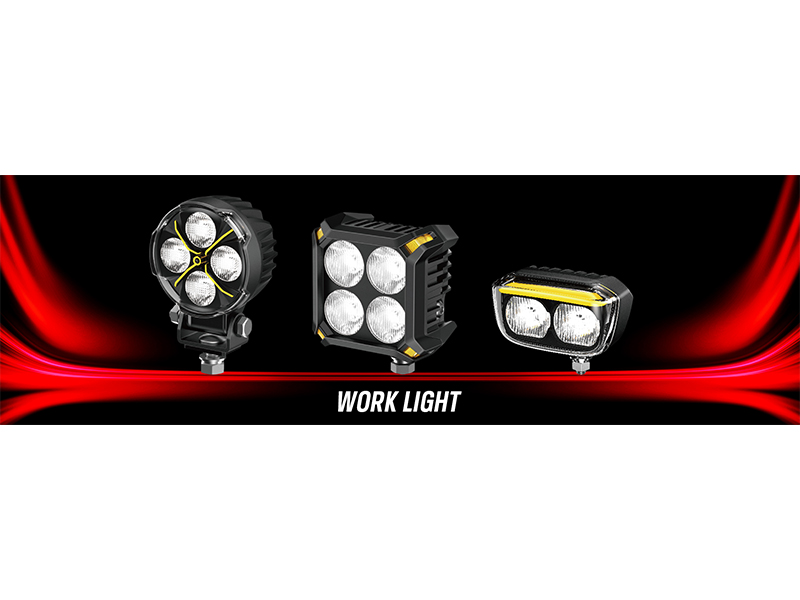
Choosing the right LED work light for heavy-duty vehicles is essential for improving safety, visibility, and operational efficiency in demanding environments such as construction, agriculture, mining, logistics, and industrial maintenance.
Unlike standard lighting products, heavy-duty work lights must perform reliably under vibration, dust, moisture, extreme temperatures, and long operating hours.
However, with hundreds of options available in the market, selecting the right product requires understanding more than just brightness or price. This guide explains the key technical and practical factors that actually determine real-world performance.
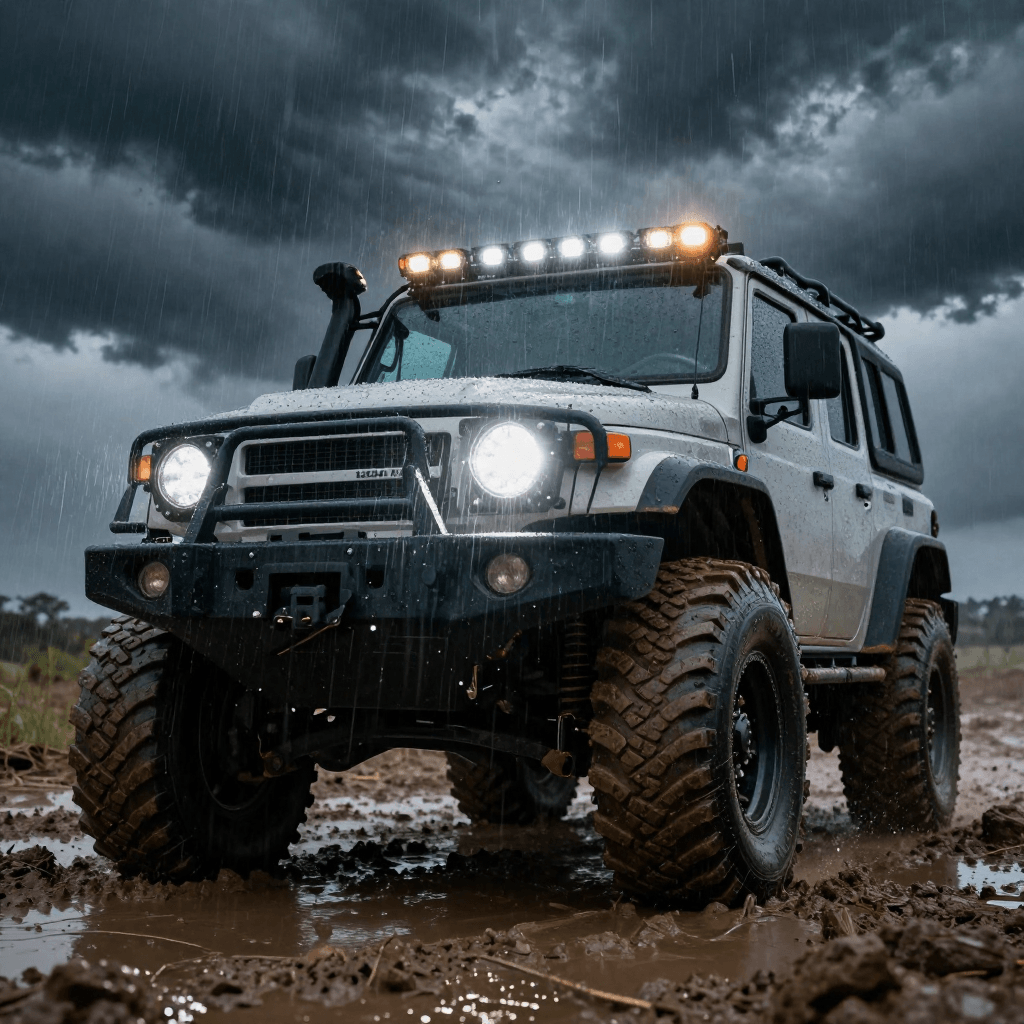
1. Brightness (Lumens) vs Real Working Visibility
One of the most common mistakes buyers make is focusing only on brightness ratings.
In real applications, usable light distribution on the working surface is more important than maximum lumen value.
A high-quality LED work light should:
- Provide even illumination across the working area
- Avoid glare for operators and surrounding workers
- Maintain stable visibility in dust, fog, or rain conditions
Practical application insight
- Close-range maintenance work → requires wide, soft flood lighting
- Outdoor construction sites → require higher output and balanced coverage
- Mining environments → require high penetration and long-range visibility
In field applications, we often observe that users selecting lights only based on “high lumens” end up with uneven coverage or excessive glare, reducing actual work efficiency instead of improving it.
2. LED Work Light Beam Pattern Selection
Beam pattern determines how light is distributed, and it often has a greater impact than brightness itself.
Common beam types:
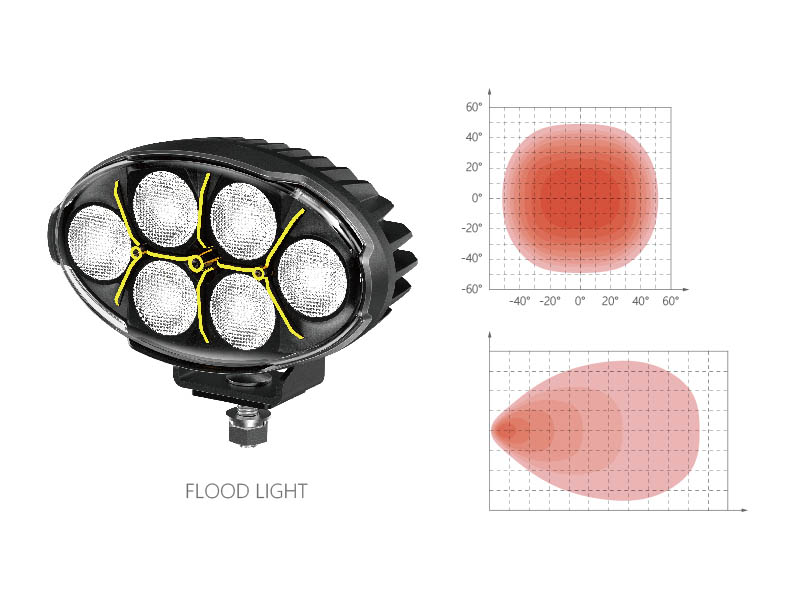
Flood Beam
- Wide-angle coverage
- Ideal for close and medium-range work
- Best for general task lighting
Spot Beam
- Narrow and focused
- Designed for long-distance visibility
- Suitable for driving or directional lighting
Combo Beam
- Hybrid of flood + spot
- Balanced solution for multi-purpose environments
Selection principle:
If the beam pattern does not match the working scenario, even a high-performance LED light will underperform.
3. Durability for Heavy-Duty Applications
Heavy-duty vehicles operate in extreme environments where lighting systems are constantly exposed to:
- Continuous vibration
- Dust and mud
- Mechanical shock
- High and low temperature cycles
Key durability requirements:
- Reinforced aluminum or die-cast housing
- Anti-vibration internal structure
- Stable thermal management system
- Corrosion-resistant surface coating
Based on field feedback, most lighting failures are not caused by LED chips, but by poor heat dissipation or structural failure under vibration.
4. Waterproof Rating (IP Standard)
Waterproof performance directly determines long-term reliability in outdoor environments.
Common IP ratings:
- IP67 → dustproof + temporary water immersion
- IP68 → long-term water resistance
- IP69K → high-pressure wash resistance (recommended for heavy-duty machinery)
In real industrial and agricultural use, lighting systems are frequently exposed to rain, mud, and pressure cleaning. Therefore, waterproof reliability is a critical factor in reducing maintenance cost and downtime.
5. Voltage Compatibility (12V / 24V / Wide Range 9–32V)
Different vehicles operate on different electrical systems.
A professional LED work light should support:
- 12V systems (light-duty vehicles)
- 24V systems (heavy-duty trucks and machinery)
- Wide input range (9–32V DC for universal compatibility)
This is especially important for fleet operators, distributors, and OEM applications where multiple vehicle platforms are involved.
6. Application-Based Selection
Many users make the mistake of selecting lighting products without considering actual working scenarios.
Common applications:
- Construction machinery
- Agricultural equipment (tractors, harvesters)
- Forklifts and warehouse vehicles
- Mining machinery
- Trucks and utility vehicles
- Industrial maintenance systems
Key principle:
Each application requires different beam angle, brightness distribution, and mounting position.
A correctly matched lighting system always outperforms a “high-spec but mismatched” product in real working conditions.
7. Manufacturer Reliability
For distributors, importers, and OEM brands, supplier capability is as important as product specifications.
A reliable LED work light manufacturer should provide:
- Stable product quality across batches
- OEM/ODM customization capability
- Technical support for different applications
- Consistent delivery and supply chain stability
- Long-term warranty and after-sales support
Field Experience
In real-world testing and customer feedback across agricultural and construction applications, we consistently observe that LED work light performance issues are rarely related to brightness alone.
The most common failure factors include:
- Incorrect beam pattern selection
- Poor waterproof sealing in low-cost products
- Insufficient thermal design causing brightness degradation
- Over-reliance on wattage instead of usable light output
These findings highlight that professional lighting selection must be based on application-driven engineering decisions rather than simple product specifications.
FAQ
What is the best LED work light for heavy-duty vehicles?
The best LED work light depends on the application, but key factors include beam pattern, durability, waterproof rating (IP67 or higher), and voltage compatibility (9–32V DC).
How many lumens do I need for a work light?
- Small vehicles: 2,000–4,000 lumens
- Medium machinery: 4,000–8,000 lumens
- Heavy-duty equipment: 8,000+ lumens
However, beam distribution is more important than total lumens.
What is the difference between flood and spot beam?
Flood beam provides wide-area illumination for close-range work, while spot beam is designed for long-distance focused lighting.
Are LED work lights waterproof?
Yes, professional LED work lights typically use IP67, IP68, or IP69K protection levels depending on application requirements.
Can LED work lights be used on all vehicles?
Most LED work lights support 12V–24V systems and can be used on construction, agricultural, mining, and industrial vehicles when properly installed.
Conclusion
Selecting the right LED work light for heavy-duty vehicles requires a combination of technical understanding and real-world application awareness.
The most important factors include:
- Beam pattern selection
- Real usable brightness (not just lumens)
- Durability and thermal management
- Waterproof protection level
- Voltage compatibility
- Application-specific configuration
When these factors are properly matched to the working environment, LED work lights significantly improve operational safety, efficiency, and reliability in demanding industrial conditions.